


The 500W panel is designed for broader coverage and more efficient sessions.
It’s ideal if you want to treat larger muscle groups—such as legs, back, hips, and glutes—without splitting recovery into multiple small sessions.
More coverage. Fewer sessions.A higher-output red + near-infrared panel designed for deeper, more efficient recovery — without turning your routine into a full-time protocol.
Best for larger areas and faster sessions.

Most customers upgrade to this once they want fewer sessions with broader coverage.
The 500W Panel is built for people who want to do more in less time.
It delivers higher output across a wider area, making it easier to treat large muscle groups in a single session — without increasing complexity.
Use it consistently for moderate-length sessions on areas that take the most load from training, work, or daily stress.
Uses a combination of red and near-infrared light (660nm + 850nm).
Notes:


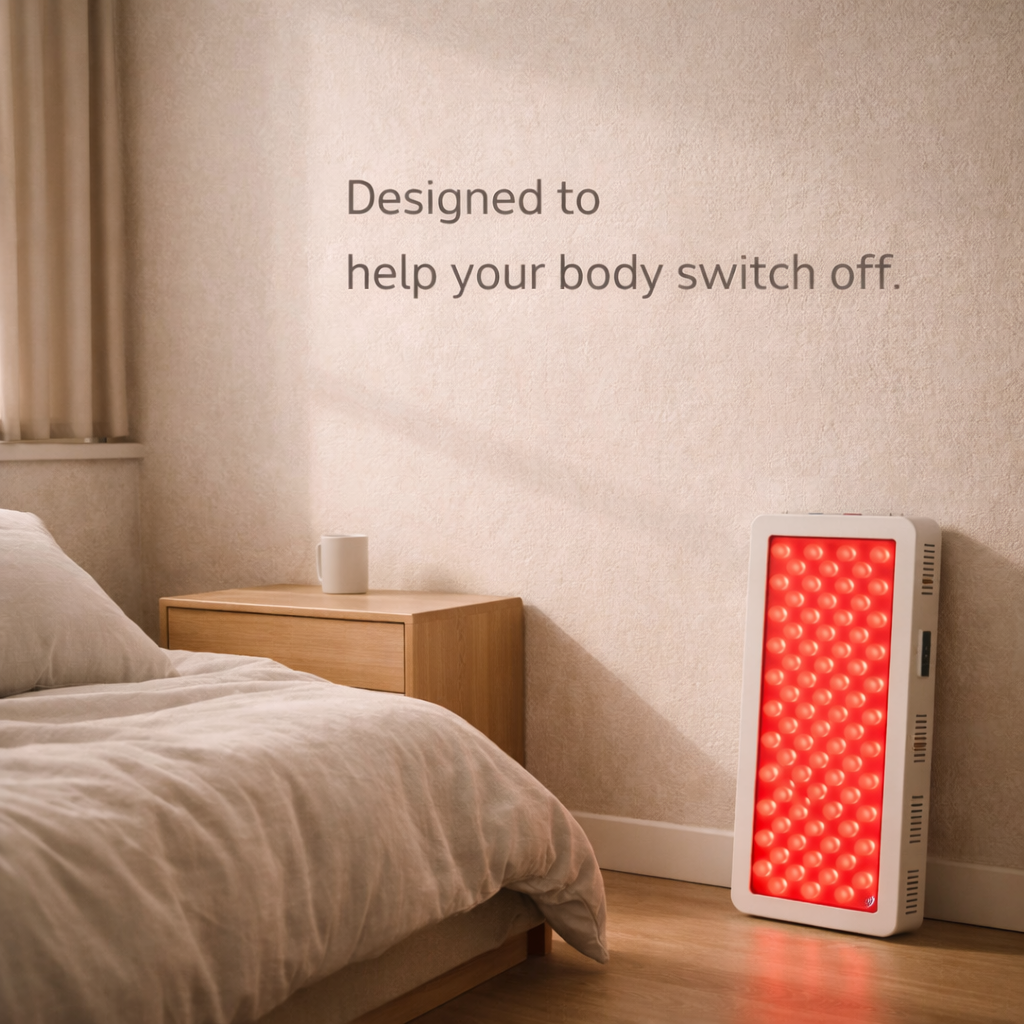
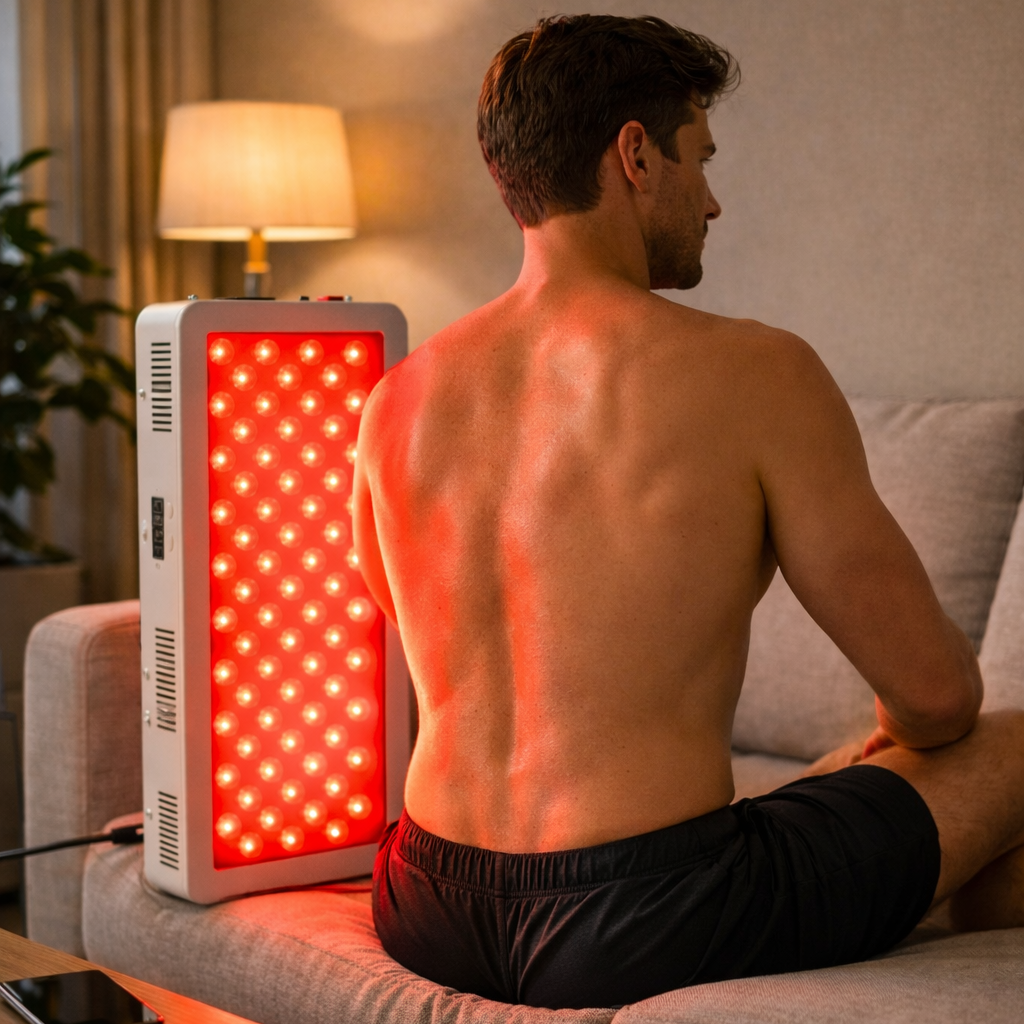
This panel is designed for people who already value consistency — and want more return per session.
Instead of oversized systems that demand perfect routines, the 500W panel balances output, coverage, and simplicity so it actually gets used.
More coverage. Fewer decisions. Better adherence.
Recovery only works when it fits real life.
Wavelengths: 660nm + 850nm 1:1
LED count + diode rating: 100 LEDs (5W diodes)
Power: 500W
Beam Angle: 60/90-degree
Timer Control: 5/10/15-60 mins
Input Voltage: UK 220V
Lifespan: 50,000 hours
Size: 480 × 210 × 65 mm
Weight: 5 kg
300W Red Light Therapy Panel
500W Red Light Therapy Panel
1000W Red Light Therapy Panel
The 500W panel is designed for broader coverage and more efficient sessions.
It’s ideal if you want to treat larger muscle groups—such as legs, back, hips, and glutes—without splitting recovery into multiple small sessions.
The 500W panel provides:
It’s a natural upgrade if you already value consistency and want fewer sessions with more reach.
Not in a single session.
While it covers more area than the 300W, it’s still designed for large-area targeted recovery, not full-body exposure at once.
For full-body sessions, a larger panel would be more suitable.
Most users run:
Because output is higher, longer sessions are usually unnecessary.
Yes.
The panel is designed for regular, repeatable use without complex recovery protocols.
It can be, but it’s usually better for people who:
If you’re completely new, the 300W panel may be an easier place to start.
“500W” refers to the panel class and LED configuration, not the electrical power draw.
Actual power consumption is significantly lower and typical for high-efficiency red and near-infrared therapy panels.
Position the panel approximately 20–60cm from the target area.
You can adjust distance based on comfort and session length.
Avoid staring directly into the LEDs.
If the panel is facing your upper body or face, close your eyes or use basic eye protection.
This is standard guidance for all high-output LED panels.
The panel comes with a 90-day risk-free guarantee.
If it doesn’t fit into your routine or expectations, you can return it within the trial period.